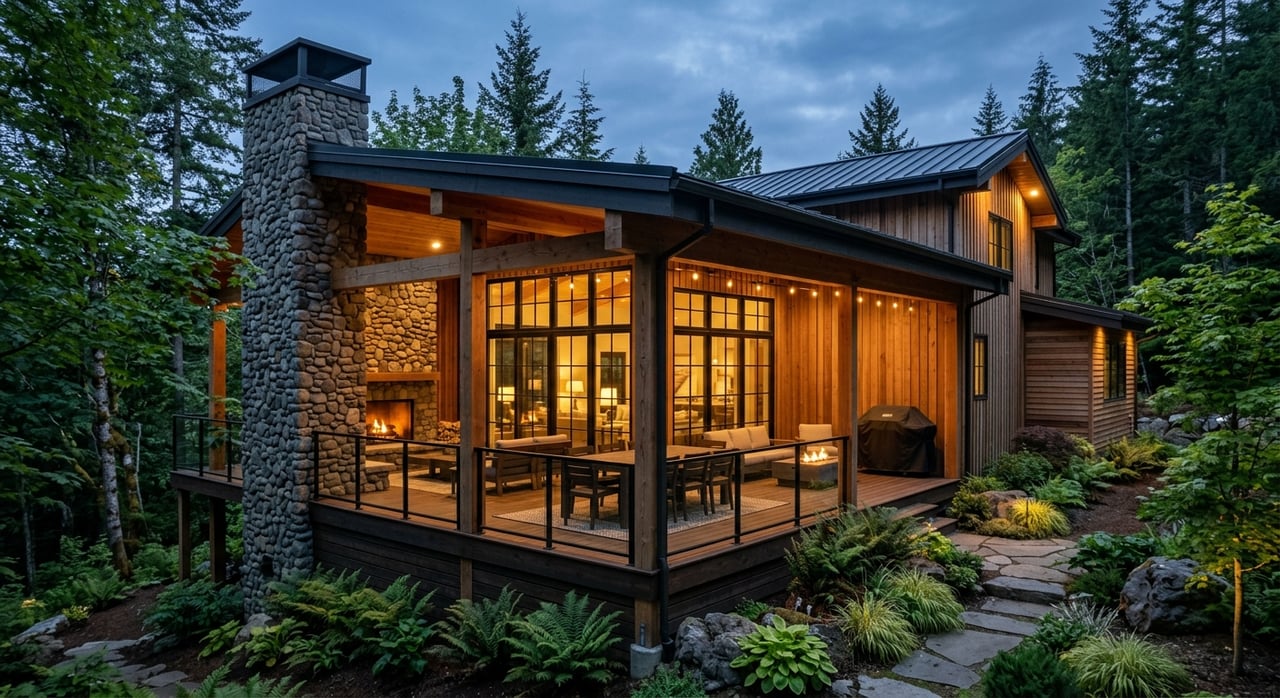
How Arkansas Investors View Broken Bow Cabin Portfolios
If you are an Arkansas investor looking at Broken Bow cabin portfolios, the first mindset shift is simple: this is not a standard rental market. You are evaluating a tourism-driven asset class shaped by weekend travel, seasonal demand, and guest experience. When you understand how that changes pricing, occupancy, and risk, you can make smarter portfolio decisions. Let’s dive in.
For investors in Arkansas City and across Desha County, Broken Bow can feel close enough to monitor yet different enough to require a new playbook. The area is anchored by recreation and visitor traffic, not just local employment. That matters because demand tends to rise and fall with travel patterns, holidays, and outdoor activity.
Public Oklahoma transportation reporting describes tourism as the primary economic driver in the region. The same source notes that Hochatown has about 250 residents but can host more than 30,000 people on weekends and holidays. It also reports that Beavers Bend State Park recorded 2.2 million visitors in 2021.
That visitor base helps explain why investors often view Broken Bow and Hochatown as an operating business first and a real estate holding second. Beavers Bend State Park itself spans 3,482 acres and includes 47 cabins, 393 campsites, and a broad mix of activities like hiking, boating, fishing, and river recreation. In practical terms, your revenue outlook is tied to how well a property fits a destination stay.
From an Arkansas perspective, Broken Bow offers access to a high-traffic leisure market within the broader southeast Oklahoma tourism corridor. That cross-border appeal can make it easier for regional investors to understand the customer profile because many guests are coming for short stays, family trips, and group getaways.
It also means you should not underwrite these cabins like long-term rentals. In a traditional residential model, job growth and local household formation often lead the conversation. In Broken Bow, the stronger drivers are visitor volume, recreation demand, and the area’s ongoing infrastructure response to growth.
Oklahoma transportation officials have also pointed to road capacity, access management, and corridor safety as recurring public issues. That does not weaken the investment case by itself, but it does show a maturing market that needs infrastructure to keep pace with demand.
Public short-term rental data suggests a market with moderate occupancy but strong nightly rates. AirDNA reports 4,464 Broken Bow Airbnb and Vrbo properties, a 93 market score, 44% occupancy, about $451.80 average daily rate, and roughly $51,100 in annual revenue. AirROI, using a different dataset, reports about 3,091 active listings, 36.7% occupancy, about $459 ADR, and $53,796 in annual revenue.
The exact totals differ, which is normal when platforms use different methodologies. Still, both sources point to a similar range. Broken Bow appears to operate in the mid-30s to mid-40s occupancy band while maintaining premium pricing near $450 per night.
For you as an investor, that combination is important. It suggests the area is not built on constant year-round occupancy. Instead, the market often depends on higher revenue per booked night and strong performance during key travel periods.
One of the biggest mistakes investors make is assuming a smooth 12-month revenue curve. Public data does not support that view. AirROI shows March as the strongest revenue month, July as the peak occupancy month, and September as the weakest revenue month.
The same dataset shows an average booking lead time of about 47 days and an average stay of 2.7 nights. That points to a market driven by short leisure trips rather than extended stays. If you are comparing multiple cabins, seasonality should influence your cash reserve planning, pricing strategy, and expectations around shoulder-season performance.
This is one reason portfolios can outperform one-off ownership. A mix of cabin sizes and guest profiles may help smooth some seasonal swings, even though no portfolio can remove market seasonality altogether.
Broken Bow’s supply mix supports a portfolio approach better than many buyers realize. AirDNA shows that 1-bedroom listings account for 24% of supply, 2-bedroom listings 20%, 3-bedroom listings 24%, 4-bedroom listings 15%, and 5-plus-bedroom listings 17%. That spread matters because it shows demand is not centered on one narrow property type.
AirROI adds another useful layer. It reports that 3-bedroom listings make up 23.7% of the active Airbnb market, 3-plus-bedroom properties make up 54.1% of supply, and 8-plus-guest homes make up 58.6% of listings. The average listing hosts 6.5 guests and includes 5.6 beds.
In plain terms, the market already serves multiple trip types. Smaller cabins may appeal to couples and short weekend guests. Mid-size cabins may fit family travel. Larger lodges can line up with reunions, group trips, or multi-family stays.
That diversity is one reason Arkansas investors often see portfolios as a practical strategy instead of an aggressive one. A well-balanced mix can help you participate in different booking segments rather than relying on one guest type.
Another key point from the public data is that 99.7% of active supply is entire-home or apartment inventory. This tells you the area is built around private-cabin stays rather than room-by-room lodging. Guests are usually booking an experience, not just a place to sleep.
That has direct implications for acquisition choices. Layout, privacy, lot setting, and group functionality can matter as much as bedroom count. In a market like this, the property’s ability to deliver a destination feel may influence performance just as much as raw square footage.
If you are considering more than one property, you would not be early to that model. AirDNA identifies multiple large property managers in Broken Bow with dozens to nearly 200 listings. That suggests portfolio-scale ownership and professional management are already established parts of the market.
For investors, this helps validate the idea that Broken Bow can be approached as a system, not just as a collection of individual cabins. It also means buyers should evaluate operations carefully. Management structure, turnover standards, pricing execution, and guest positioning all affect how a portfolio performs over time.
Recent sales data shows premium pricing, but it also shows why investors should read the numbers carefully. Zillow places Broken Bow’s average home value at $348,343, down 2.6% over the past year. At the same time, Zillow reports a median sale price of $603,500, a median list price of $632,967, 490 homes for sale, and a median time to pending of 101 days.
Redfin reports McCurtain County’s median sale price at $602,876, up 20.6% year over year, with a 97.8% sale-to-list ratio and 21.2% of homes selling above list. Taken together, those figures suggest a market influenced by higher-end cabin inventory and a transaction mix that can shift from year to year.
For Arkansas investors, the lesson is not that appreciation is guaranteed. It is that Broken Bow should be viewed as a specialized market where value can be shaped by land scarcity, visitor demand, and infrastructure investment, not just conventional local housing trends.
Public reporting also points to ongoing corridor growth. Oklahoma transportation officials say land investment has been driven by cabin rentals and visitor destinations. They also note that improvements along the US 259 corridor are aimed at congestion and safety, and that the 2024 opening of Choctaw Landing added traffic pressure.
These details support the broader investment case because they reflect sustained interest in the region. At the same time, they reinforce a practical truth: growth can create friction. As a buyer, you should account for access, traffic flow, and road context when evaluating any specific property or portfolio.
This may be the most important due diligence point in the entire process. Short-term rental rules are jurisdiction-specific in the Broken Bow area. You need to confirm whether a property sits inside Hochatown, inside Broken Bow city limits, or in another unincorporated area because the compliance path is not the same.
The Town of Hochatown says STR licensing and tax remittance run through its portal. Its public documents include approved ordinances for a 4% lodging tax and a 3% excise tax, and the town shifted to a Granicus-based STR system in 2024.
The City of Broken Bow, by contrast, has its own specific-use permit application process and city code enforcement. For portfolio buyers, this means one of the first underwriting questions should be jurisdiction. A strong-looking deal can change quickly if you assume the wrong licensing or tax framework.
Even in a strong tourism corridor, not every site carries the same risk profile. Redfin’s county risk module flags McCurtain County with moderate flood exposure and major wildfire exposure. That makes site selection more than a box to check.
You should think through insurance, defensible space, lot placement, and access before you close. A portfolio strategy is not just about buying several cabins. It is about choosing properties that fit your risk tolerance and operating plan.
For many Arkansas investors, the best framing is this: a Broken Bow cabin portfolio is a tourism operating business with real estate appreciation potential. Returns depend on location, cabin size, guest mix, seasonality, and local compliance. The upside can be compelling, but the market rewards disciplined analysis.
That is where local market knowledge becomes valuable. You want a clear view of how one cabin differs from another, how jurisdictions affect operations, and how a portfolio can be assembled around multiple traveler segments rather than one narrow use case.
If you are comparing options from Arkansas City, Desha County, or elsewhere in Arkansas, the goal is not to chase a headline number. It is to build a portfolio strategy that matches how Broken Bow actually works.
If you want help evaluating luxury cabins, STR investment opportunities, or buildable lots in the Broken Bow and Hochatown corridor, Dawn Hibben offers specialized, transaction-focused guidance built around this market.
Stay up to date on the latest real estate trends.

Get assistance in determining current property value, crafting a competitive offer, writing and negotiating a contract, and much more. Contact her today.