Should Arkansas Investors Bet on Broken Bow STR?
If you live in Arkansas City or anywhere in Desha County, you may already see the challenge for short-term rental investing close to home: local tourism demand is limited compared with larger destination markets. Desha County recorded $24.3 million in visitor spending and 211 tourism jobs, while Arkansas statewide welcomed 50.7 million visitors in 2023 and generated $10.3 billion in visitor spending, according to the Arkansas tourism impact report. That gap helps explain why some Arkansas investors look beyond their local market and study Broken Bow. If you are weighing that move, this guide will help you compare the opportunity, the risks, and the diligence points that matter most. Let’s dive in.
For many investors in Arkansas City and the broader Desha County area, the local question is simple: can you find enough year-round visitor demand to support a strong STR thesis? Based on the tourism data, Desha County is a much smaller visitor economy than major leisure-driven markets in the region.
That does not mean investing locally is impossible. It does mean that if your strategy depends on consistent traveler demand, premium nightly rates, and a cabin-style vacation product, you may need to evaluate a true destination market instead of relying on a smaller tourism base.
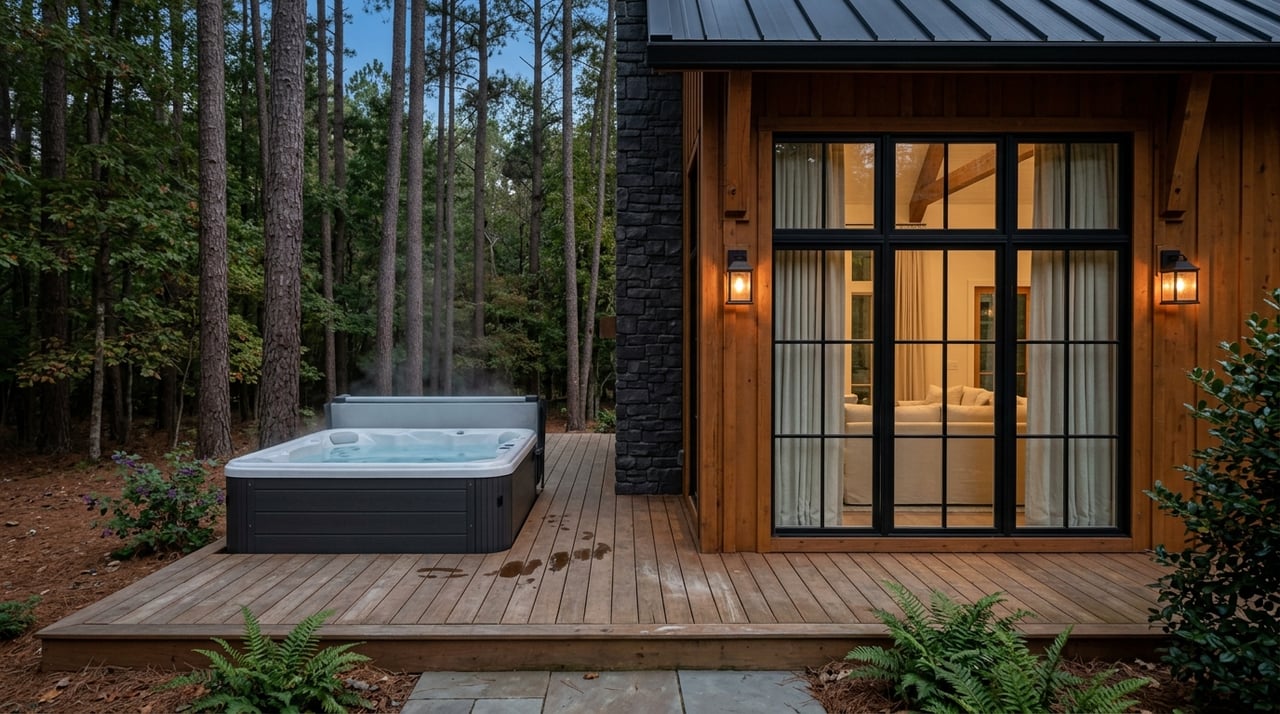
Broken Bow and Hochatown attract investor interest because the demand story is tied to a major outdoor recreation corridor. Beavers Bend State Park is a 3,482-acre park centered around Broken Bow Lake and the Mountain Fork River, with hiking, boating, fishing, water skiing, float trips, canoeing, horseback riding, 47 cabins, 393 campsites, and year-round trout fishing.
That mix supports a broader travel season than many one-note vacation markets. According to ODOT project materials, travel patterns in the area are strongly influenced by seasonality and holiday weekends, but the market is not limited to summer alone.
The visitor count also helps explain why capital continues to flow into the area. ODOT says tourism is the primary economic driver in the region, Hochatown has roughly 250 residents but hosts more than 30,000 people on weekends and holidays, and Beavers Bend drew about 2.2 million visitors in 2021.
Another recent demand driver is Choctaw Landing, which opened in 2024 as a 100-room resort and casino. ODOT notes it added more than 400 jobs and an estimated $95 million in regional economic impact. For investors, that does not guarantee performance, but it does show the corridor continues to attract major tourism-related investment.
The current STR market in Broken Bow is sizable and highly competitive. AirDNA market data shows 4,372 active properties, 43% occupancy, $445 average daily rate, and $50.5K in annual revenue.
Those numbers tell an important story. Broken Bow is not winning on unusually high occupancy. Instead, it stands out as a market with strong rate power, where revenue is driven more by premium nightly pricing than by keeping calendars full every night.
Supply is also still growing. AirDNA reports active listings are up 8% year over year, which means you should underwrite this market as a competitive environment, not an easy-entry opportunity.
If you are comparing Broken Bow with smaller Arkansas STR markets, the property type matters. AirDNA shows the market is 100% entire-home rentals, with 78% of inventory distributed across Airbnb and Vrbo and 77.8% of listings using a 2-night minimum.
The inventory mix also skews toward larger, group-friendly homes. About 23% of listings are 3-bedroom properties, 14% are 4-bedroom homes, and 16% are 5-bedroom-or-larger properties.
Guest expectations are high and fairly standardized. AirDNA reports 99% air conditioning, 99% internet, 98% wireless internet, 98% kitchens, and 98% heating across listings. In other words, basic functionality is not your differentiator in Broken Bow. It is the starting point.
For investors, that means a simple cabin with minimal amenities may have a harder time competing. This is a professionalized market where the product often needs to feel fully equipped, polished, and purpose-built for guest stays.
If you are investing from Arkansas City, it helps to compare Broken Bow with in-state alternatives. The Arkansas tourism site frames markets like Hot Springs, Eureka Springs, Bentonville, Bella Vista, and Fayetteville around different visitor profiles, from resort travel to arts, history, and trail-based recreation.
Here is how key STR metrics compare based on AirDNA data:
| Market | Active Listings | Occupancy | ADR | Annual Revenue |
|---|---|---|---|---|
| Broken Bow | 4,372 | 43% | $445 | $50.5K |
| Hot Springs National | 2,436 | 44% | $272 | $29.1K |
| Eureka Springs | 1,288 | 43% | $208 | $23.9K |
| Bentonville | 1,143 | 56% | $204 | $25.5K |
| Bella Vista | 738 | 54% | $195 | $23.7K |
| Fayetteville | 929 | 48% | $251 | $24.5K |
Broken Bow’s advantage is clear on nightly rate. Its ADR is roughly 1.6 times Hot Springs National, 1.8 times Fayetteville, and 2.1 times Eureka Springs, based on the same AirDNA market data.
The tradeoff is that occupancy is not meaningfully stronger than every Arkansas alternative. Bentonville and Bella Vista, for example, post higher occupancy. That is why Broken Bow often makes more sense for investors pursuing a premium-rate strategy rather than an occupancy-first model.
If you are based in Desha County, Broken Bow may appeal to you for one main reason: it offers a more developed destination-market STR case than your local area. The region has a major park, established tourism identity, expanding lodging and entertainment infrastructure, and a large base of existing vacation rental demand.
But that upside comes with a higher bar. You are not buying into an emerging, undersupplied niche. You are entering a market where professional operators, large managers, and amenity-rich homes already set the standard.
Every strong STR market comes with friction, and Broken Bow is no exception. ODOT documents describe weekend and holiday congestion, limited pedestrian facilities, more than 100 driveways along US-259, and ongoing road reconstruction efforts intended to improve access around Hochatown.
Operational competition is another real issue. With 4,372 listings, 8% listing growth, and large managers controlling sizable portfolios, it is important to assume guests will compare your property against well-designed and professionally marketed alternatives.
For many investors, the biggest mistake is underwriting the market based on top-line revenue averages without accounting for the product quality needed to compete. A lower-end property may sit in the same zip code as a high performer, but that does not mean it will command similar rates.
Before you move capital from Arkansas into Broken Bow, focus on the details that can make or break performance.
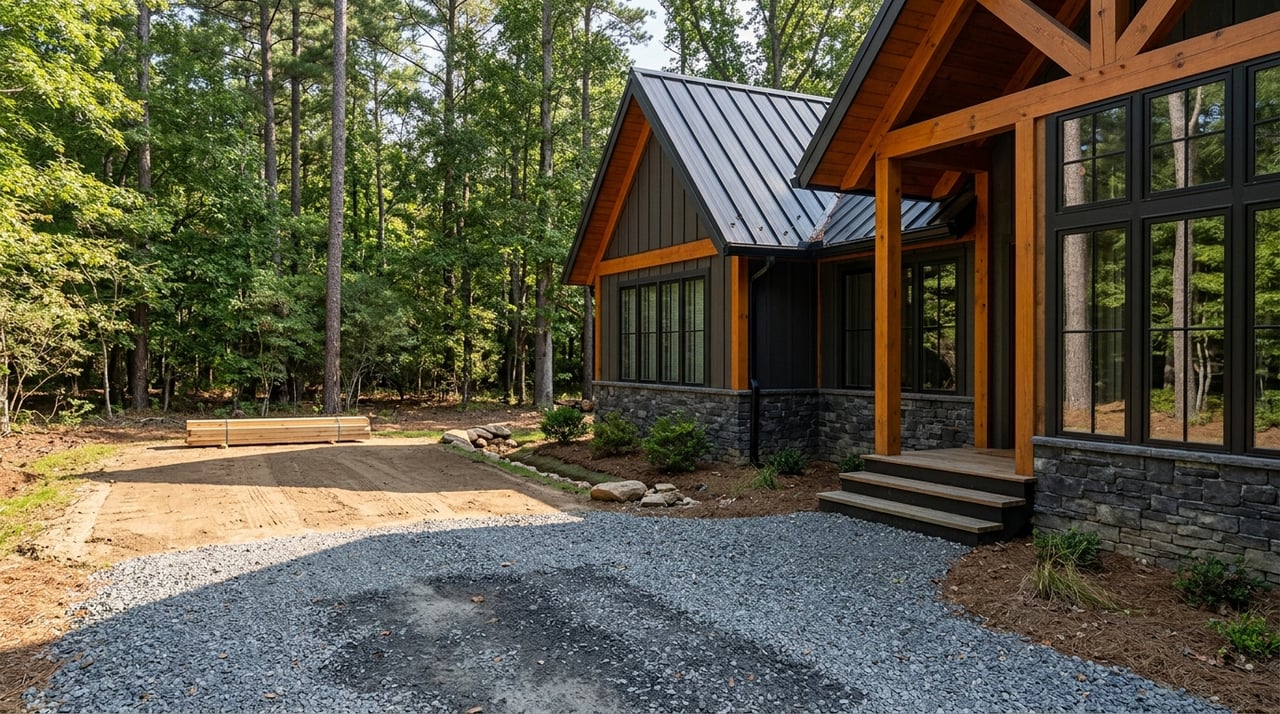
Road access and parking matter in a high-drive leisure market. ODOT’s congestion data suggests you should look closely at how guests will enter, park, and navigate the area, especially during peak weekends and holiday periods.
You should verify HOA covenants, access limits, and any property-specific constraints before underwriting. A cabin that looks attractive on paper can become less appealing if guest use, parking, or improvements are restricted.
Because Broken Bow is operationally competitive, local execution matters. Cleaning consistency, maintenance response time, guest communication, and turnover efficiency can affect both reviews and repeat booking performance.
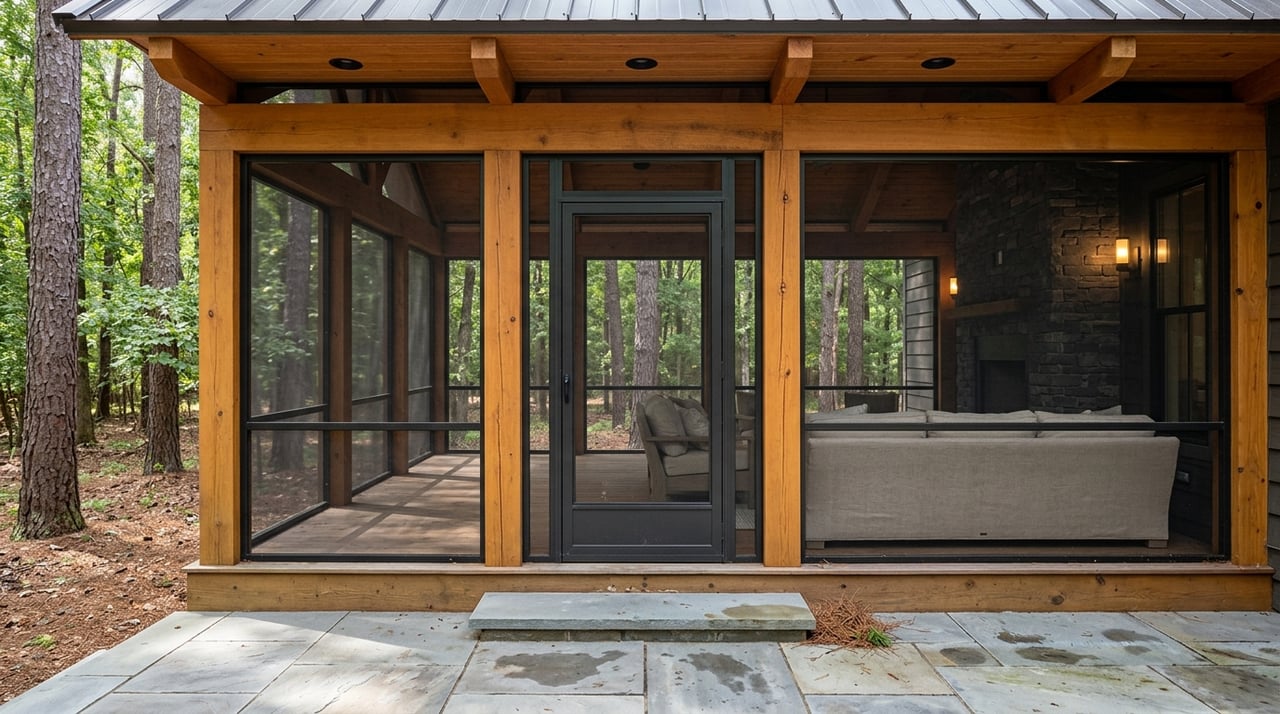
In a cabin market built around group travel, amenities and durability matter. Furniture, outdoor features, and high-use entertainment spaces need to hold up under frequent guest turnover.
Many listings benefit from the same regional tourism story. That means your cabin often needs to win bookings through layout, design, amenities, and guest experience rather than relying on a broad “near the park” pitch by itself.
If you are deciding between Broken Bow and Arkansas markets, make sure you compare local rules as carefully as revenue. For example, the City of Fayetteville short-term rental rules include a cap of 475 Type 2 STR business licenses, business-license requirements, possible CUP requirements in residential zones, a landlord representative registry, and a 2% HMR tax.
The lesson is simple: regulatory friction can materially affect returns. Before you choose any market, verify the current city or county rulebook rather than assuming every destination operates the same way.
For many Arkansas investors, Broken Bow stands out because it offers something Desha County does not at the same scale: a concentrated, tourism-driven cabin market with proven rate power. The numbers support that view, especially when compared with several Arkansas STR alternatives.
At the same time, the market asks more from you. Higher nightly rates come with higher expectations, stronger competition, and greater pressure to choose the right asset, the right amenity package, and the right operating plan.
If you are considering a Broken Bow or Hochatown purchase from Arkansas, working with a local specialist can help you pressure-test the numbers, compare submarkets, and identify whether a cabin, lot, or investment property actually fits your strategy. If you want a grounded view of current opportunities in the corridor, connect with Dawn Hibben to schedule a consultation.
Stay up to date on the latest real estate trends.
Get assistance in determining current property value, crafting a competitive offer, writing and negotiating a contract, and much more. Contact her today.